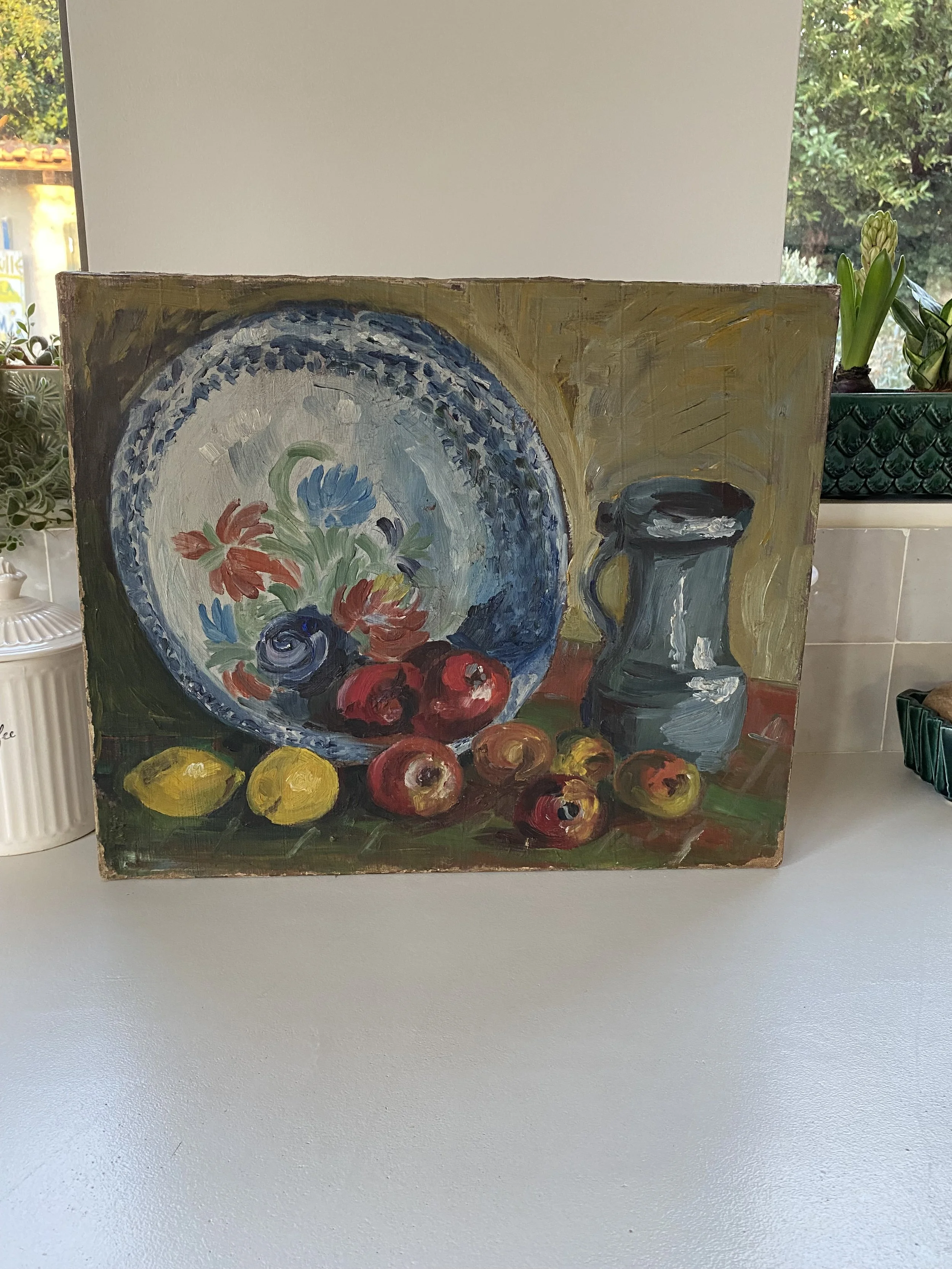
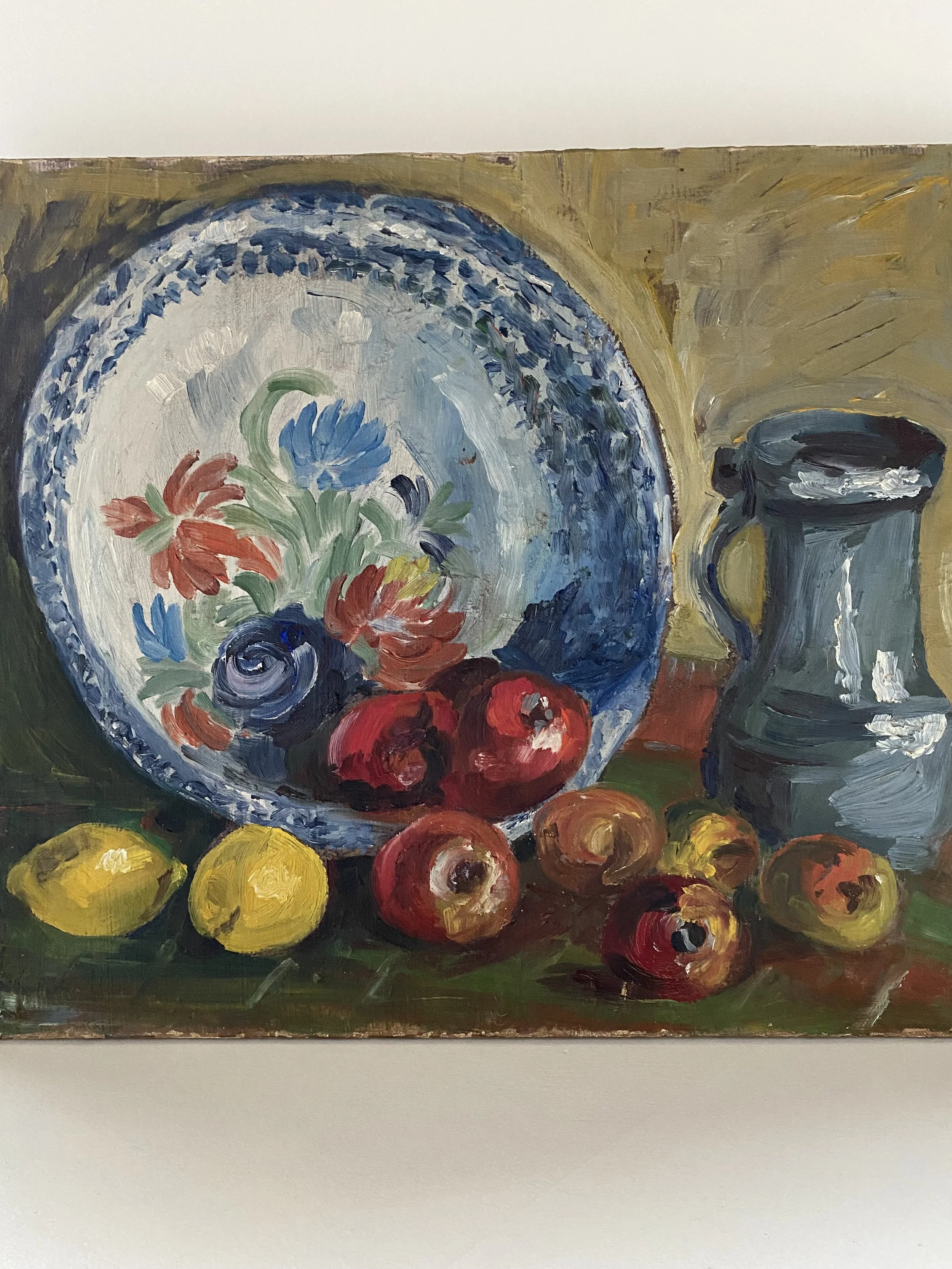
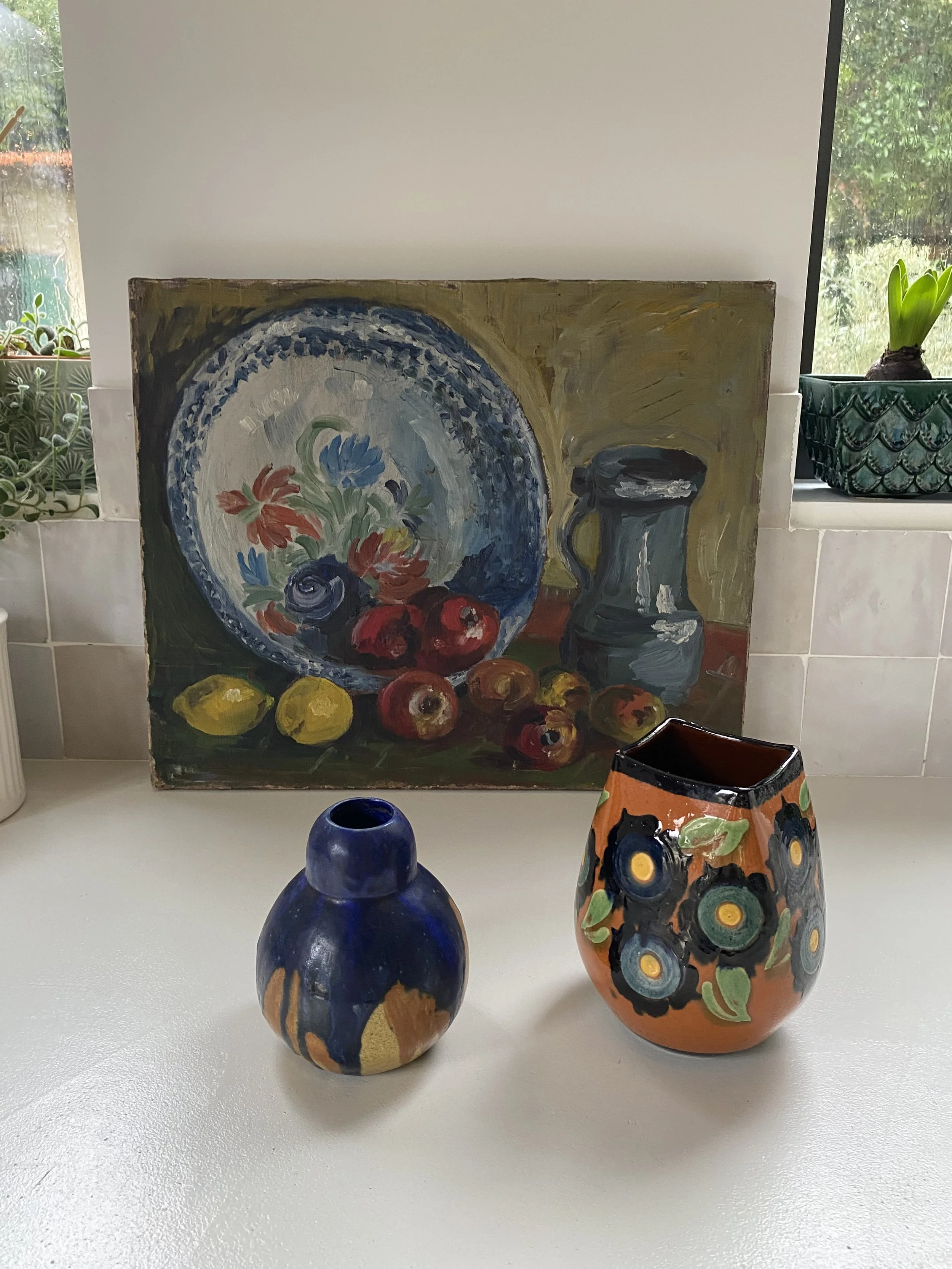
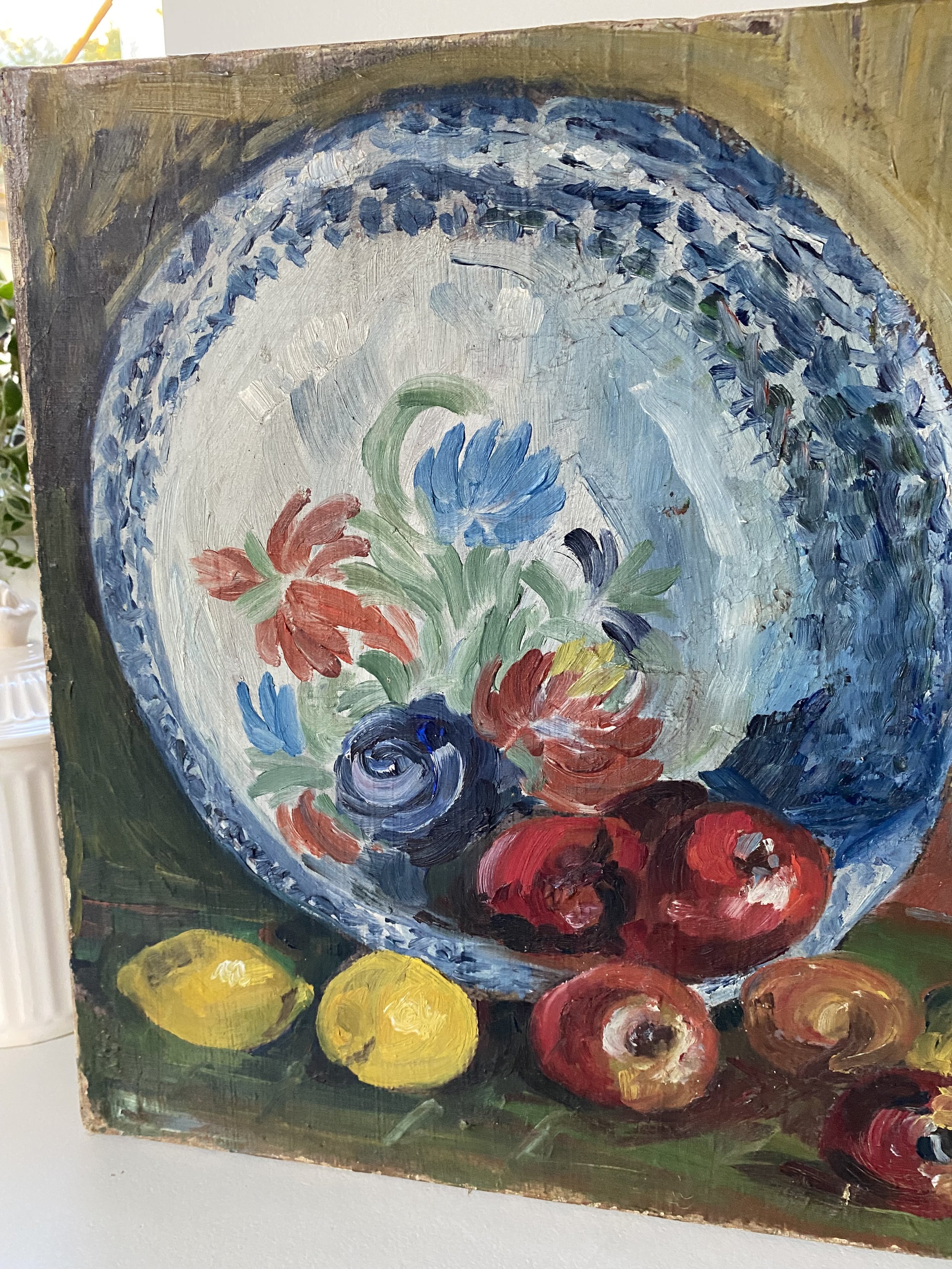
Nature morte, huile sur toile. Non signée Circa 1900/30.
Cette nature morte met en scène une composition chaleureuse et colorée typique de la peinture d’atelier de cette période.
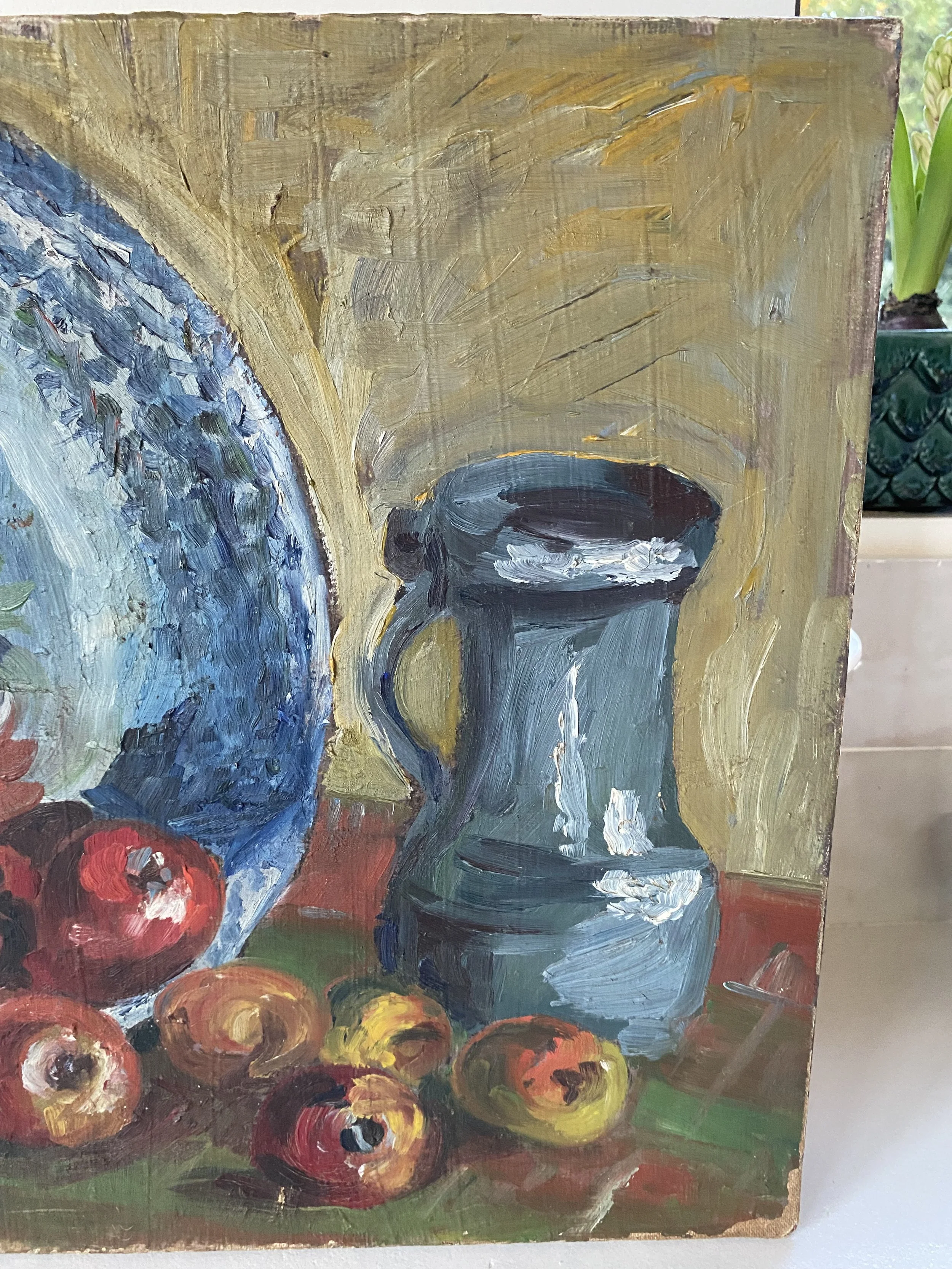
Au centre, domine un grand plat en faïence décoré, orné de motifs floraux rouges, bleus et verts, rappelant les céramiques traditionnelles d’Europe centrale ou méridionale. À l’avant-plan, l’artiste a disposé un ensemble de fruits variés : citrons, pommes et fruits roussis, peints avec une touche épaisse. Sur la droite, une cruche en métal ou en grès équilibre la composition.
L’arrière plan est constitué d’un fond ocre et vert, brossé de manière libre.
L’ensemble évoque un travail d’artiste ou d’élève d’art, influencé par les tendances post-impressionnistes.
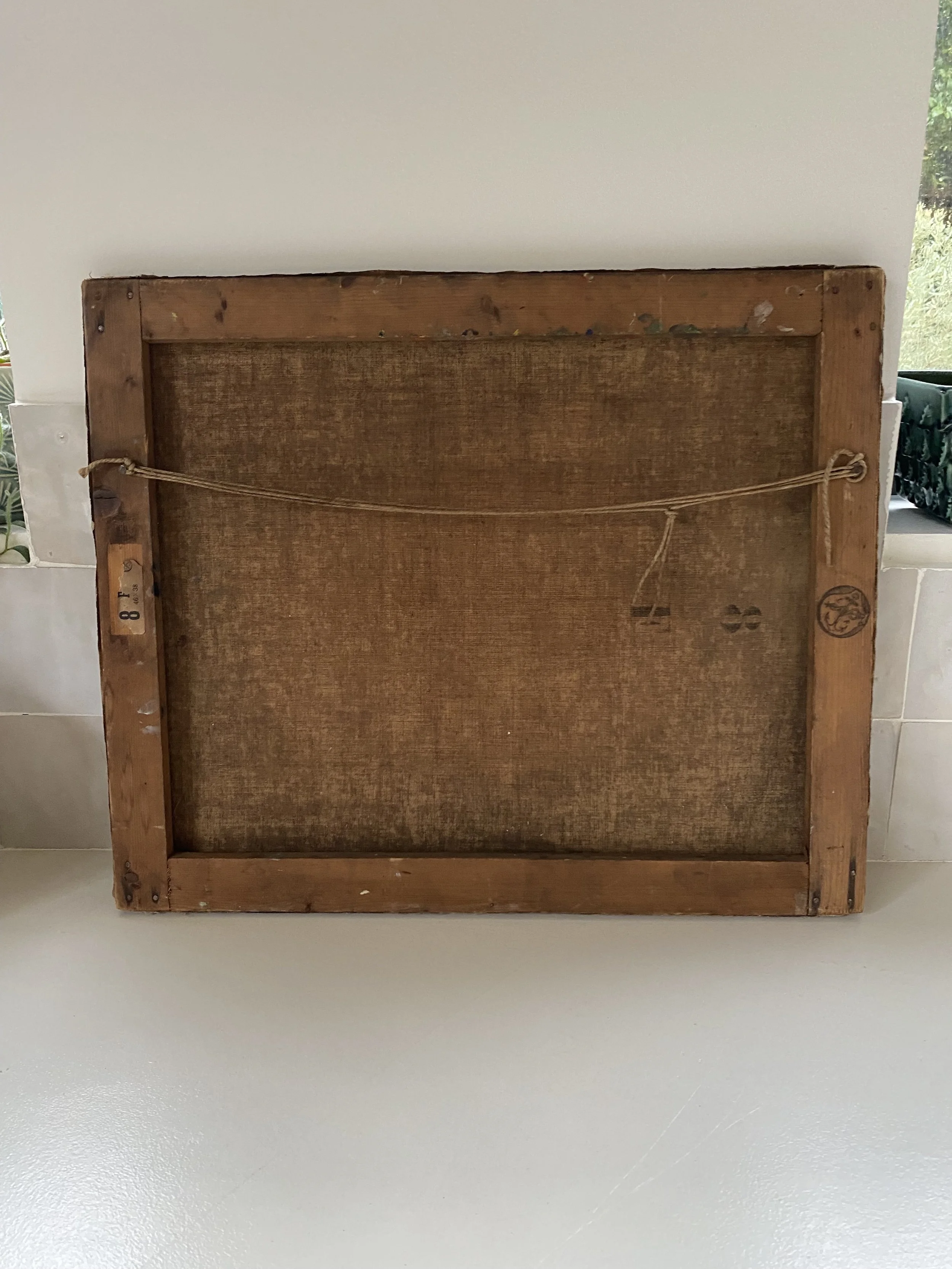
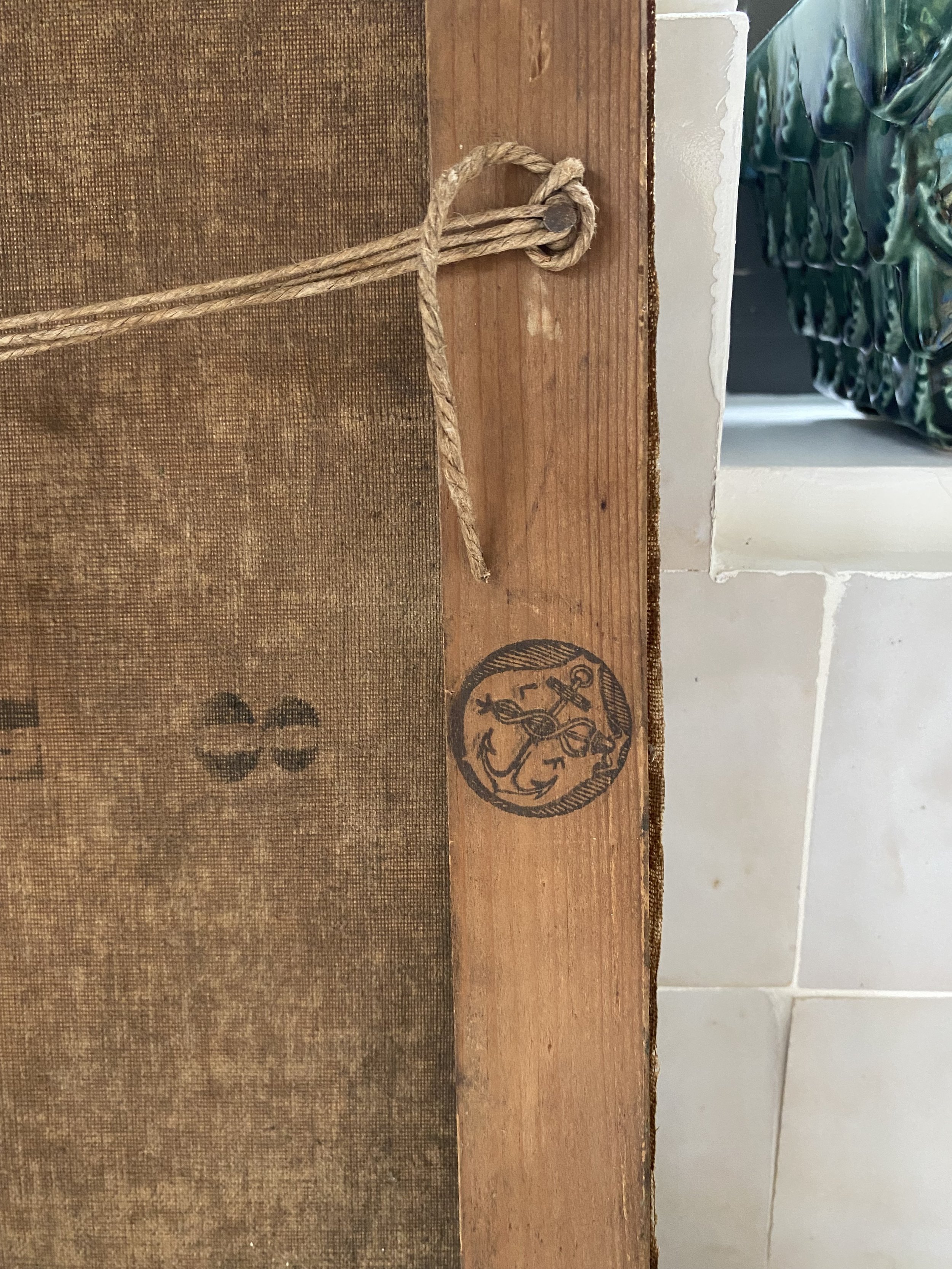
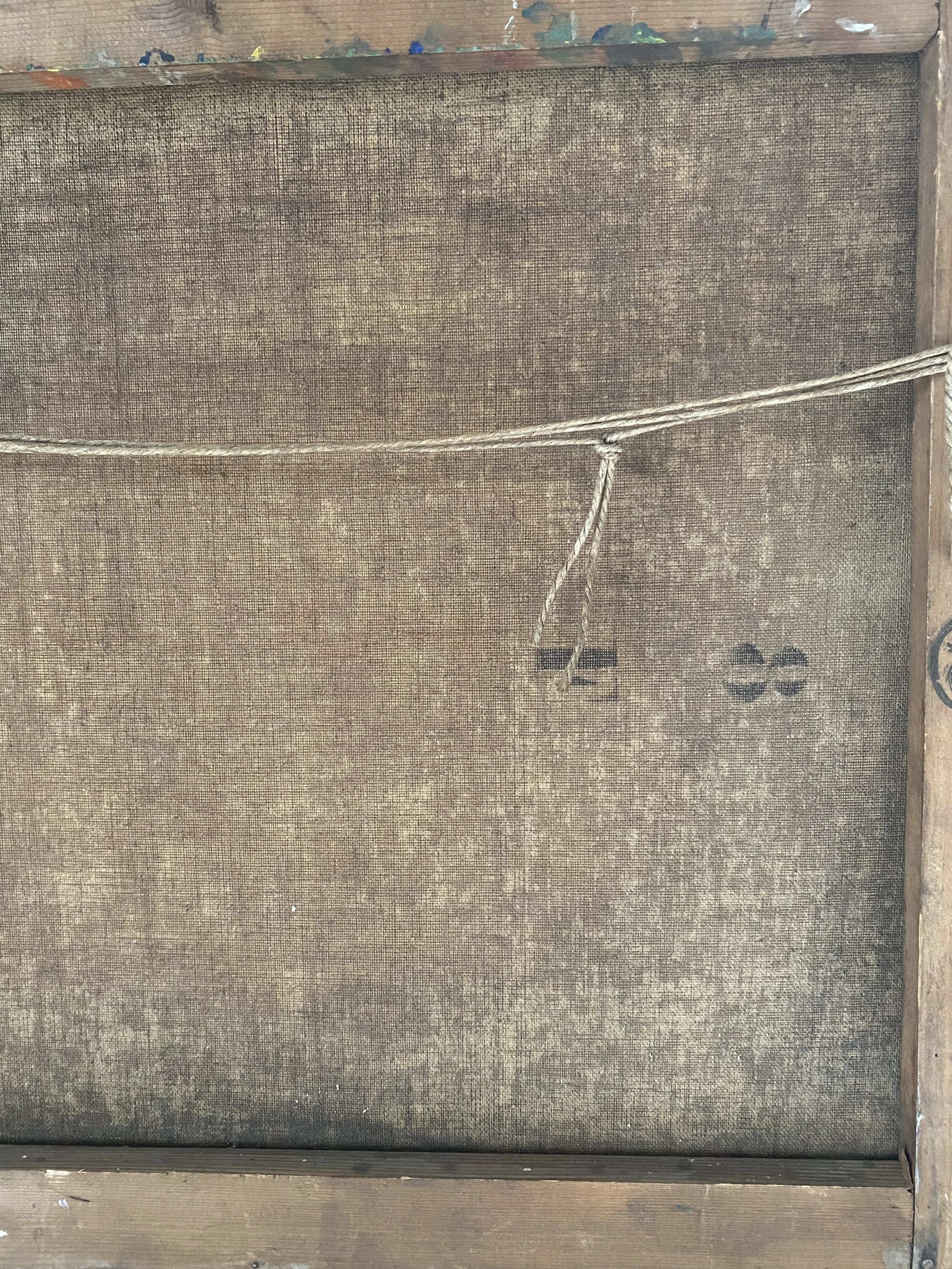
Le châssis au dos, en bois ancien, porte un cachet circulaire représentant une ancre et un caducée, marque de fabrique de la maison Lefranc & Cie, fondée en 1836 qui fut l'une des toutes premières entreprises françaises à vendre des matériels pour artistes.
Technique : huile sur toile
Format : 46 × 38 cm.
Nature morte, huile sur toile. Non signée Circa 1900/30.
Cette nature morte met en scène une composition chaleureuse et colorée typique de la peinture d’atelier de cette période.
Au centre, domine un grand plat en faïence décoré, orné de motifs floraux rouges, bleus et verts, rappelant les céramiques traditionnelles d’Europe centrale ou méridionale. À l’avant-plan, l’artiste a disposé un ensemble de fruits variés : citrons, pommes et fruits roussis, peints avec une touche épaisse. Sur la droite, une cruche en métal ou en grès équilibre la composition.
L’arrière plan est constitué d’un fond ocre et vert, brossé de manière libre.
L’ensemble évoque un travail d’artiste ou d’élève d’art, influencé par les tendances post-impressionnistes.
Le châssis au dos, en bois ancien, porte un cachet circulaire représentant une ancre et un caducée, marque de fabrique de la maison Lefranc & Cie, fondée en 1836 qui fut l'une des toutes premières entreprises françaises à vendre des matériels pour artistes.
Technique : huile sur toile
Format : 46 × 38 cm.